On Co-Becoming and Symbiosis

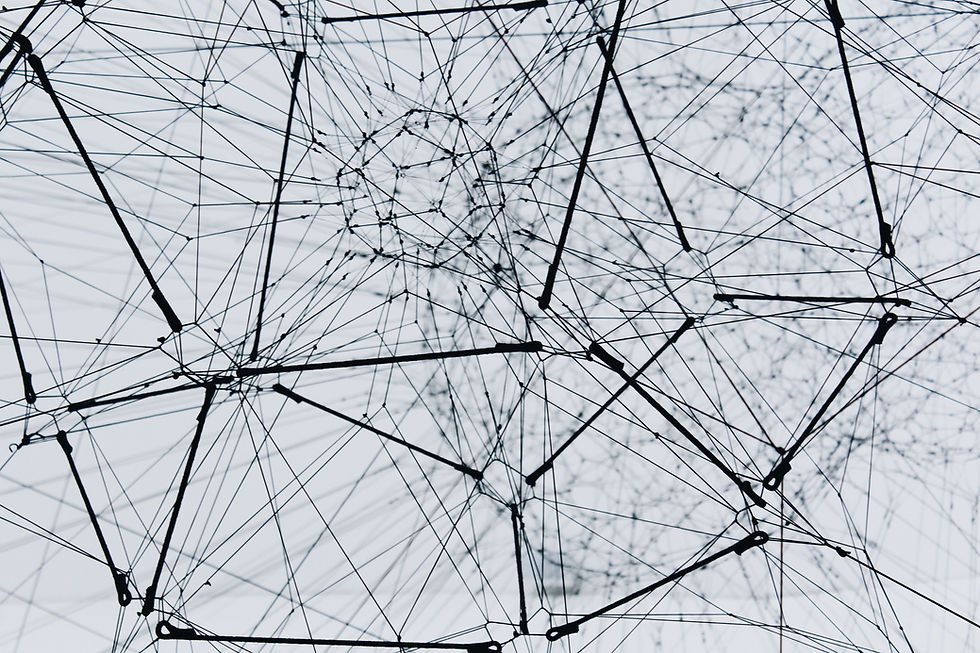
In the evolution of all living beings, comes the interconnected web of consumer and the consumed.
The prey and predator. Herb and herbivore.
We see that the grass is kept in check by the voracious deer and rabbit, while wolves and eagles stalk their prey, keeping their numbers thin. From this comes the break down into fecal matter, the waste product, which it too becomes fuel for the coprophiles and the decayers, bacteria and fungi that further deconstruct matter in an enzymatic flurry.
Energy is transferred. Energy is consumed. Energy is released, and the entropic inevitability comes to pass.
And of course, from the breakdown of nutrients comes new life, regeneration. New forms and varieties that erupt from the corpses and bones. Plant matter and mushrooms explode out of the desiccating sinew and fecund blood-mass. Organic to inorganic and back again, cradle to grave.
That is life. The very foundation of evolutionary existence, to survive, is this ever growing need for energy to change forms. And contribute to the myriad of things, the nets and webs of lives that create the living tissue of Mother Gaia. Transformed from dust and water, the clay animated by the nearly infinite sunlight that graces our shared planet. This is the co-evolutionary relationship of all things living, we feed upon each other or provide a gift of life through reproduction, transformation, or destruction.
Take the human gut microbiome as an example for our inner investigation. This ecosystem is balanced where all actors and players contribute their role. Human beings take in nutrient-rich biomass, some of it easily broken down and converted into smaller molecules - sugars, amino acids, nucleic acids, fatty acids (it’s acids all the way down!) - that easily pass across the gastrointestinal lining and into the bloodstream. But that is only one factor in the dance of digestion.
There are the trillions of bacterial cells that require sustenance, require nourishment. Demanding nutrients for their ever growing populations. Initiated by an enterprising few micro-beings who first settled the primordial stomachs of the first multicellular organisms with a functional digestive tract. And as is all things in nature, there’s no free lunch. There is always a give and take, and over time the natural selection process gave rise to a massive web of microbial communities, living in some kind of dynamic balance with one another and with the host organism.

Some find niches as an extension of the organism’s metabolism, filling in by converting inputs into essential molecular components such as vitamins or amino acids that cannot be manufactured by the host’s biochemical machinery. Or by further breakdown of recalcitrant molecular forms into usable energy sources, such as in the case of the anaerobes living in proximity to our colonocytes, fermenting indigestible cellulosic fibers into butyric acid as an incidental source of energy for their mammalian partner.
Others work more assertively, producing neurotransmitters and neurotransmitter precursors to communicate with the innervated gastric tissues. The so-called gut-brain connection, further linked up to the psychobiotic microbes that provide a sort of psychic feedback to the human mind in response to whatever was digested or the changing conditions of the gut ecosystem. Perhaps a deluge of sugar spikes the biosynthesis of serotonin, releasing some kind of positive reinforcement loop to the brain in a Rube Goldberg cascade between host and gut species. We still know painfully very little about this relationship.
And of course, there are the more offensive species who release inflammatory substances that continuously bombards the innate immune system and epithelial linings. Their numbers are kept low from the stronger competition of more benign members of the vast constellation of microbial partners. In small numbers, their presence is harmless. But the balance can always be upset. And here is the rub. We are forced to concede that some presence of these members play a role in the balance. Why are they there? Do they serve a purpose, or simply politely exist until some environmental change gives them access to greater growth, greater reproductive capacity?
Regardless, in the death of these many microscopic organisms, they too come to be a part of the host as their substance is digested and consumed. And part of the host tissues, fall apart and become nutrition for these innumerable microorganisms. Material shared, material returned.
In such a regime, we play host to an extraordinary number of species, so many of which we will never know biochemically or genetically. Some remain hidden beneath the web of complexity, their numbers making little impact on data retrievable by analytical machinery and instruments, like stars too distant and too faint to fully identify with certainty. Regardless, we learn more and more about the vital role played by these masses in the growth and survival of the organism. Wipe them out through pharmaceutical sterility, and development is stunted and immunity destroyed. Imbalance arise, through changes in diet or a regimen of antibiotics, and we see the pathway towards disease.
Yet, our daily obliviousness to their presence and continuous protection does not reduce their importance. And much like all things, we see this in the many links that bind the wealth of living creation across the planet. Whether we look into the soil, and see within the myriad connections that sustain the balance of minerality with our photosynthetic kin. Or the oceanic digestion of carbon dioxide into entrapped carbon through phytoplankton, converted to sediment to bottom of the seas that undergoes a long geological sleep.
There exists the many relationships of bacteria that transform nitrogen into a biogenic substance readily suitable for the formation of the musculature of migratory beings, first beginning in the absorption by plant material and converted to amino acids and proteins, and to be consumed by the next trophic order. Microscopic fungi that protect against blight that spread amongst the trees, macroscopic fungi that provide nutrition and entheogenic insight from those same cellulosic-rich towers.
And that is only one fraction of relationships, a tiny sliver of the living pie, not mentioning the many others that exist between fungi, plant, and animal kingdoms, too numerous to articulate here.

The net of Indra is a startling microcosm and macrocosm that spreads in untold directions.
So then, what are we, these living beings?
Are we not anymore than a bureaucracy of biological information, of chemical directions and ties organized in time and space, constantly in flux? Food enters and disintegrates, being transported into different organic subsections for which there is need, orchestrated by the billions of years of evolution. Energy passing through the systems, carrying on the processes to turn sugar to ATP, amino acid to muscle, nucleic acid to blueprints, mineral to bone and blood, the remainder a waste product for the next trophic layer to consume.
Our DNA constantly churning out ribonucleic instructions for the construction of proteins, directing the many going-ons of each cell, interwoven into differentiated tissues, further enmeshed into even more complex organs and organ systems. As a tightly wound soft-matter watch with the gears clicking into action at each precise millisecond as needed.
Or perhaps we are a mass of cellular kingdoms, each jostling one another for their own supply of bioresources, physical space, and chemical nutrition. The whole mass a careful balance of negotiations between cellular neighbors, differentiated forms resulting in greater or lesser advantage as an individuated sack of cytoplasm. Each vying individually, holding court to only the interest of survival. The complex shape of multicellular life is nothing more than a convenience of form.
Or perhaps, a dance? An orchestra? Harmony achieved through the convergence of the many, not as a tentative state of convenience, a mechanistic clockwork of biochemical proportions, or a trade-off between self-interested cellular parties. But as a percussive step that drives the many in unison, survival only a byproduct because existence needs an outlet for autopoietic continuation in biophysicality. Purpose not in the individual, the atomistic perspective, but in the many in relation to the singular, and the singular to the many.
So that when we eat, we do not eat as if we are a machine consuming a happenstance product of nature’s unwindings. We do not seek to comfort the individual desire for food as if the entire cosmos were just that singular hunger. But rather, we consume in honor of the greater whole, that the gift in eating comes out of the majestic play that is the relationship between mineral and plant, plant to creature.

From the near endless solar embrace that drives the thermodynamic need for continued existence, offered as a gift through the fruit, the flesh, the grain. And so we continue to take in what is needed to live out the years, the decades, knowing full well that the web of each individual life is needed to sustain the whole, and vice versa. It cannot be any other way.
One cannot remove even a single mote of dust, for the entire existence of the universe depends on that single bit. All relationships intersect together, so none is abandoned or forgotten. This is the promise that lives behind the shadow of physicality. This is the blessing of the cosmic order.
The apple that was grown on the tree in turn becomes a part of you. And you will come to be the soil that grows the tree, consumed by the worms, the ants, the creatures of the earth. And all comes to be unified within this network of eating and being eaten.
Becoming and dying.


